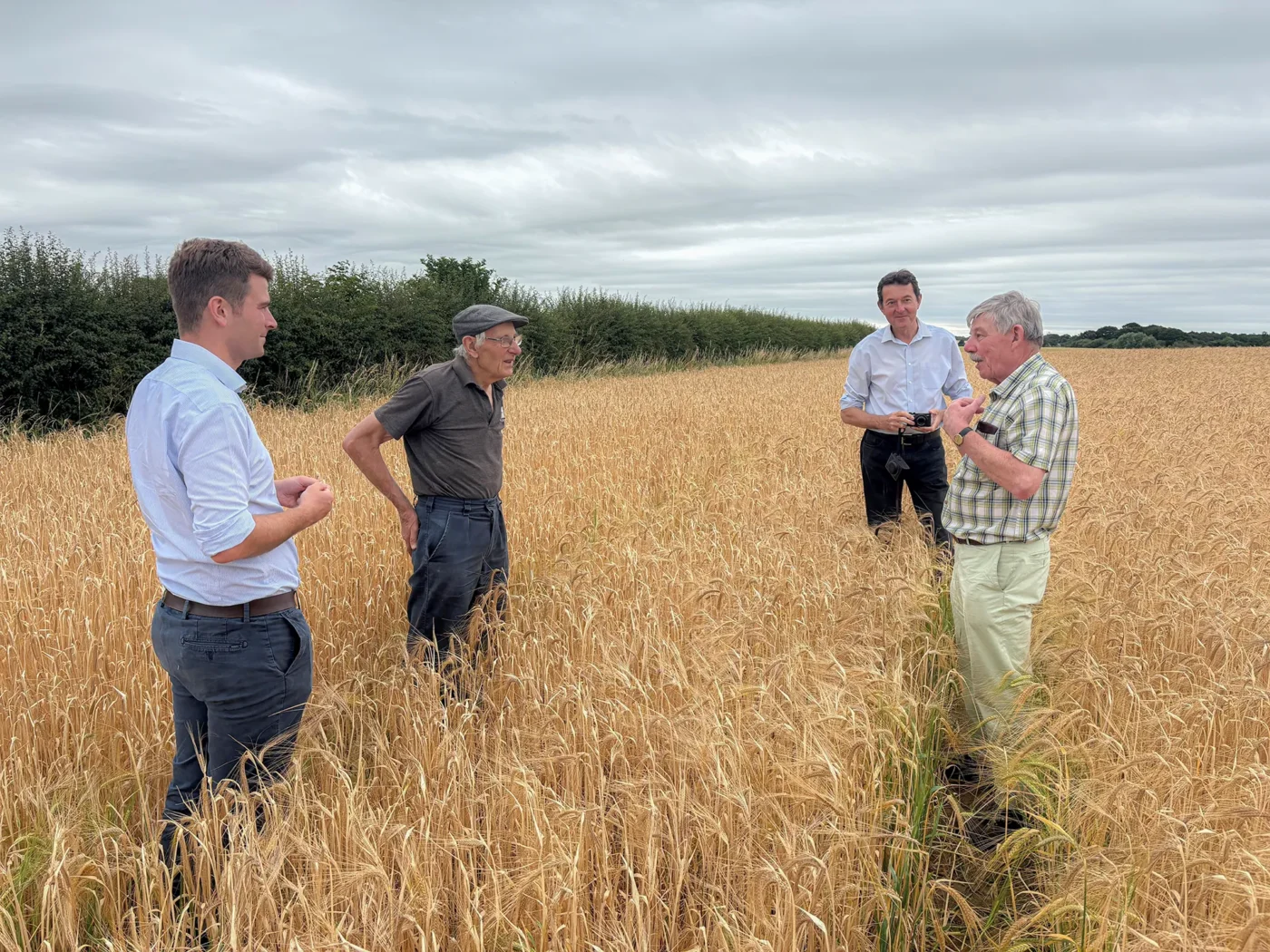
The winter crop went in largely on time and in reasonable weather conditions. This allowed the crop to become established before the colder, darker months. Likewise, the spring crops went in relatively on time, and much more like a “traditional” year.
However, that’s when things changed. The UK experienced a very dry April, May and June with some extremely high temperatures to boot. These dry, hot conditions during the prime growing months, resulted in some very poor looking crops, thin/patchy fields and short-strawed cereals. The crops had been scorched by drought and heat, rather than ripening. North Norfolk was particularly badly affected, receiving only a small amount of rain at the end of May.
Fortunately, the situation was not bleak everywhere as some areas of the country did receive rain and fared better. The Yorkshire Wolds, with more chalky soils, were not as badly affected compared to East Anglia.
The result of these poor growing conditions is that nitrogen from fertilisers is not taken up by the plant at the correct time. Therefore, Nitrogen is retained in the barley’s ear, rather than supporting the vegetative growth of the plant. In addition, the ears have tended to be shorter with fewer grains. This, combined with a low plant density per square meter, has resulted in a low yielding harvest for spring malting barley.
Winter barley appeared to be less affected due to more vegetative growth in February and March before the dry weather. Even so, it was evident from our crop walks at the end of June that it was going to be a high nitrogen year, yields were going to down, and harvest was going to be very early!
This brings us to harvest…
The first of our winter malting barley samples was received on 4th July, quickly followed by many others within a few days. Although nitrogen levels were higher than in previous years (not a problem for coloured malts), the grain size was surprisingly good and with low levels of screenings (small, under-sized grains). We managed to buy enough quality barley for our crystal and roast malt requirements up to 1.85 % nitrogen which was moved off farm at harvest into store. Moisture levels were low due to the prolonged dry weather, so additional drying was not necessary.
The winter varieties for making pale ale malts (Maris Otter, Pearl, Halcyon) are generally grown under contract with farmers on the right land, with experience producing high quality, low nitrogen malting barley. However, even some experienced farmers struggled to achieve Thomas Fawcett & Sons specification.
Some experienced farmers struggled to achieve Thomas Fawcett & Sons high specification, and some samples had to be rejected. As a result, we have bought less barley than originally planned, but with some carry-over of excellent 2024 crop, we will have enough to cover sales in 2026.
By the end of July, we had completed buying winter malting barley, and had started to see quite a few spring malting barley samples. As predicted, the nitrogen levels were variable and a lot of samples were too high between 1.70% and 2.10%.
There were samples available with Nitrogen levels below 1.60% which we were able to buy, albeit at a premium price. As harvest progressed, the majority of spring barley samples seen were high in nitrogen. It was a big relief that we don’t have to buy large quantities. Being a smaller, specialist maltster means we can select the best samples from what is available, and we have done exactly that. Those maltsters that have larger volume requirements, will most likely have to increase their maximum nitrogen specification limit and / or be prepared to transport it from further afield to secure enough barley to meet their requirements.
This year the harvest has been both early and condensed into only a few weeks. Sifting through and hand-evaluating to select the best, lowest nitrogen samples was an intense process and was completed in record time. As I write this article (middle of August), we are transporting all the barley into store that was bought for harvest move. Although this is generally a high nitrogen year for cereals in the UK, I can confirm that we have been able to move quickly and buy enough low nitrogen barley to produce our full range of quality malts, ensuring they will be available throughout 2026. All our valued customers can be re-assured of our commitment to supplying them with the very best malts available.
Brian Hickman,
Thomas Fawcett & Sons